 Tool
ToolWhat 'priority support' actually means: reading support tiers before you buy
Support is the sub-score most buyers skip on a pricing page and the one they remember at the moment of a failed payroll run or a locked account. The words vendors use for it, standard, priority, 24/7, dedicated, are not defined the same way twice. This note walks through the four things a support listing can actually commit to, with examples from the pricing pages behind the reviews on this site, checked October 7, 2026, and explains how the support sub-score on this site is built from them. The aim is a short reading order a buyer can apply to any pricing page before signing, and a list of the questions to put to a sales contact when the page does not answer them.
Four things a support listing can promise
A support line on a pricing page can commit to at most four things: which channels are open (email, chat, phone, a named contact), when they are open (business hours in a stated timezone, or around the clock), how fast someone answers (a first-response commitment in hours), and what the self-service material covers. Most listings promise one or two of these and leave the rest to inference. Slack's pricing page, read October 7, 2026, is one of the few that states three of the four on the page itself: 24/7 support on every tier including Free, a 4-hour first response time from Pro upward, and the word priority attached to Business+ and Enterprise+. Asana's pricing page, read the same day, commits to channels only: community forum, help center and academy on the free Personal plan, direct support from Asana's team on every paid plan, and customer success specialists on Enterprise, with no hours or response time stated for any tier. Both are honest listings; one is simply more complete than the other, and the reader has to notice which parts are missing.
24/7 is a window, not a speed
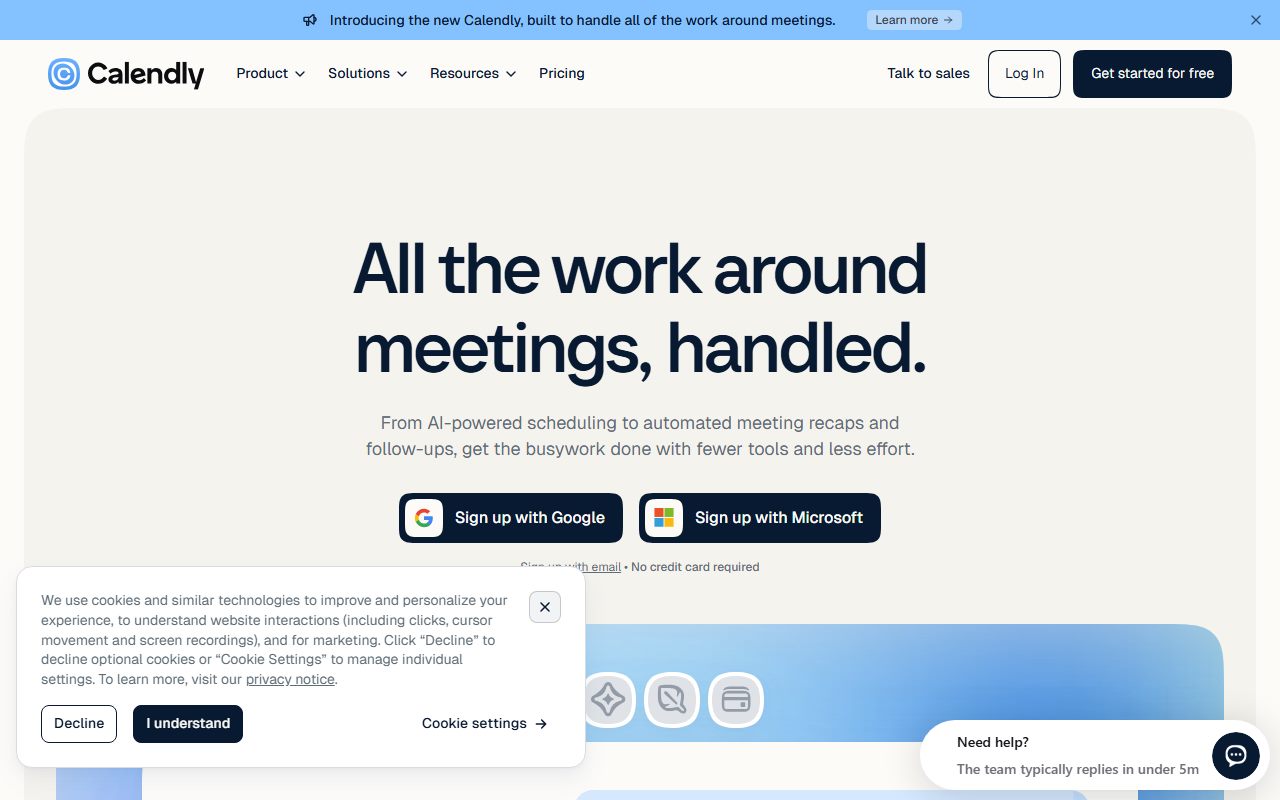
Around-the-clock availability says when a ticket can be filed, not when it will be answered, and the two are routinely confused. A vendor listing 24/7 email support with no response commitment has promised a mailbox that is never closed, which is a lower bar than it sounds. The ClickUp pricing page, per the ClickUp review, lists 24/7 support on every tier including Free but publishes no response time as a number. Calendly's pricing page lists 24/7 email support on Standard and Teams, and the Calendly review notes that a documented first-response time was not found for either tier. Basecamp lists 24/7/365 support on every paid tier and, per the Basecamp review, its support page states that response times may currently be longer than usual, a disclosure most vendors do not print. When a listing says 24/7 and nothing else, read it as 'tickets are accepted at any hour' and ask the sales contact for the response commitment in writing.
Priority only means something relative to the queue below it
Priority support is defined by what it is prioritised over. On Slack's page the Pro tier already carries a 4-hour first-response commitment, so the priority label on Business+ describes queue position rather than a faster published number; both tiers list the same four hours. That is a reasonable arrangement, but it is not what most buyers picture, which is a separate and faster desk. On other pricing pages priority is the only difference between two tiers' support lines, with no number behind either. When comparing, write down the published response commitment for the tier beneath priority. If there is none, priority is a relative position in an unmeasured queue, and the upgrade is buying a feeling rather than a commitment. The question to ask is not 'is priority included' but 'what does the non-priority queue commit to', because the answer to the second question is what priority is measured against.
Phone support, and the timezone problem
Phone support is the channel small businesses ask for most and the one most hedged. 1Password's pricing page, per the 1Password Business review, lists email and forum support on the Teams Starter Pack and adds phone support on Business, Monday to Friday, 9 AM to 5 PM Eastern. That is a clear and useful listing, and it is also a window that closes at 2 PM for a company in California and before the working day begins for one in Sydney. Xero's US support page, per the Xero review, states that the company can call you if you contact it but does not offer inbound phone support, which is a different product from a phone line even though both involve a telephone. A buyer in a different timezone from the vendor's support desk should treat a weekday phone window as roughly half as valuable as it looks, and should check whether the vendor publishes separate hours by region before counting the channel at all.
Self-service is the channel you will use most
Across the 22 reviews on this site, the self-service material is the part of the support sub-score that carries the most weight, for a plain reason: a team of ten will open a help centre dozens of times for every ticket it files. The quality that matters is organisation by task rather than by feature list, currency with the current interface, and whether the vendor documents the conceptual step as well as the mechanical one. The reviews note HubSpot's knowledge base and Notion's help centre as organised by job, and record verified user complaints about articles that lag the interface for fast-changing products such as Zoho CRM and ClickUp. A help centre that refused automated reading is noted as such in the review and the sub-score is discounted accordingly, because material that cannot be read cannot be graded. Four questions cover most of what a buyer needs to know about a help centre in ten minutes.
- Is the help centre organised by the task a new user would have, or by the vendor's feature names?
- Do the screenshots match the current interface, or do verified reports complain that they lag?
- Is there a public status page, and is it linked from the support site?
- Does the vendor label beta features as beta, and date its articles?
How the support sub-score on this site is built
The support sub-score is one of four on the published rubric, alongside ease, feature depth and value, and it is scored from documentation. It takes the channels listed by tier, any response commitment published as a number, the presence and placement of a status page, and the organisation and currency of self-service material. It does not estimate real-world response time, because that cannot be read from a pricing page, and the reviews say so in each case. Verified user reports are used as a check on the documentation: when a complaint is frequent and specific, such as the pattern around urgent problems routed to a ticket and a callback described in the Xero review, it is treated as evidence and the score is discounted. A vendor whose pricing page lists channels, hours and a response time in plain sight scores higher than one with the same support buried in a contract, because transparency is part of what is being measured. The full checklist is on the methodology page.
Bottom line
A support listing can commit to channels, hours, response time and documentation, and most commit to fewer than all four. Read 24/7 as a window, priority as a queue position, phone support as a timezone question, and the help centre as the channel you will actually use. Before signing, ask the vendor for the response commitment for your tier in writing; if the pricing page does not state one, the absence is itself information. This note is built from pricing pages and documentation as of October 2026 and from the reviews on this site; no first-hand support tickets were filed and none are claimed.